Living room lighting: three layers and the right kelvin
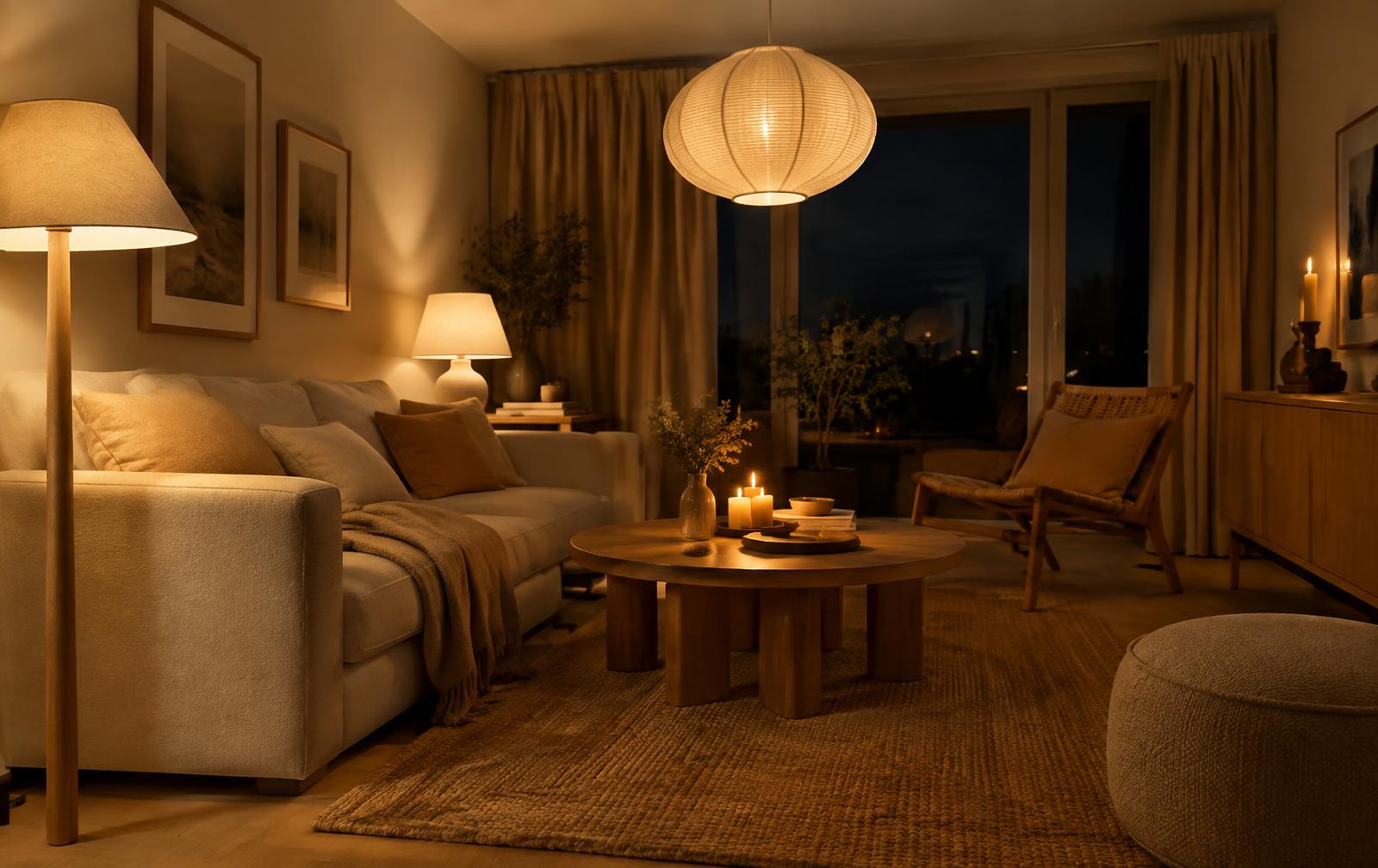
Good living room lighting means several light sources at different heights, not one bright ceiling lamp. With three layers and the right color temperature, the room is practical by day and cosy at night.
Updated 27 September 2026
Three layers of light
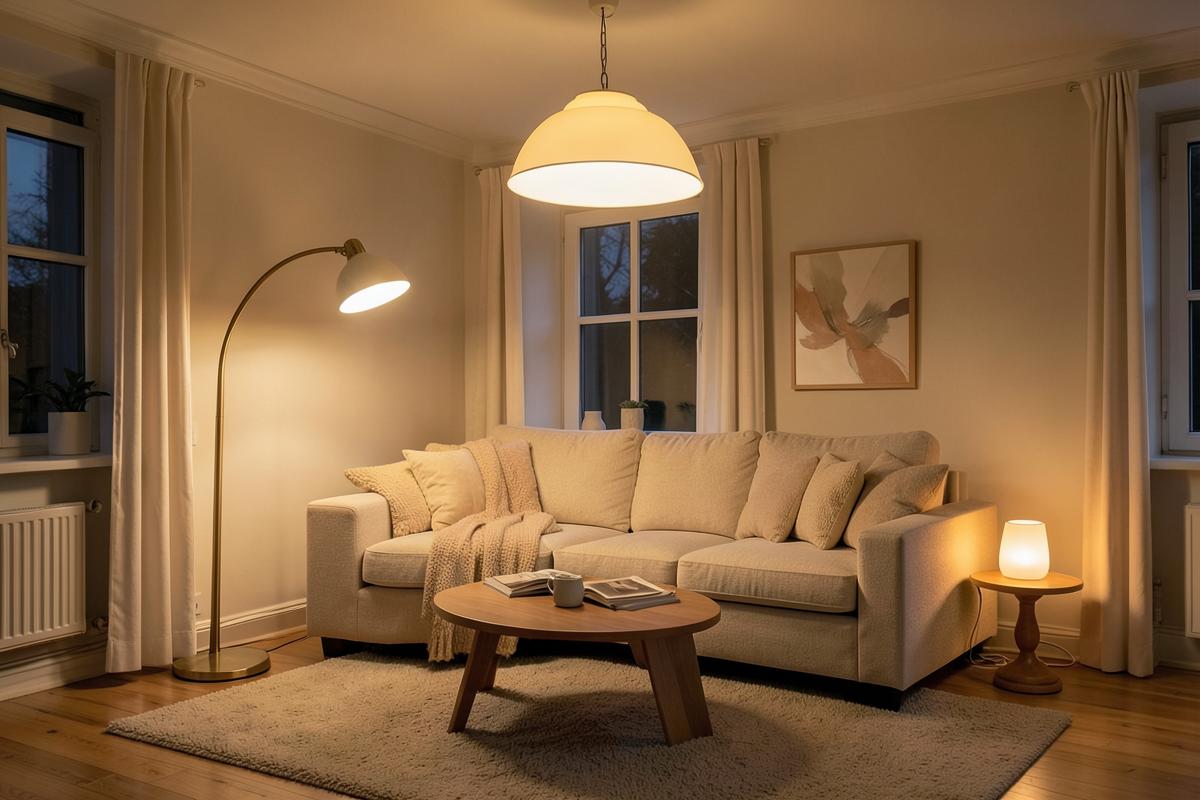
Think of light in layers. Ambient light provides the base, task light shines where you do something, and accent light adds depth and warmth. Most living rooms have too much of the first and too little of the last.
- Ambient: ceiling lamp, spots or track – ideally dimmable
- Task: reading lamp by the sofa, light over dining table and work surfaces
- Accent: table lamps, shelf lighting, string lights and candles
The right kelvin for a living room
Kelvin (K) describes how warm or cool light is. In a living room, warm light is almost always right, especially in dark winters.
| Kelvin | Light | Living room use |
|---|---|---|
| 2200–2700 K | Extra warm / warm | Accent light, table lamps, evenings |
| 3000 K | Warm neutral | Reading light, ceiling lamp, dining table |
| 4000 K | Neutral cool | Avoid in living rooms – fine for utility rooms |
Ceiling lamps and pendants: height and size
A pendant over a dining table should hang 60–75 cm above the tabletop. Its diameter can be about half the table's width. Where people walk, keep at least 210 cm of clearance underneath.
Choose shades in fabric, paper or opal glass that diffuse light softly instead of bare bulbs that glare.
Lamps for every zone
Divide the living room into zones and give each its own light source. You can switch on only what you need, and the room gains depth. See living room inspiration in different styles.
- Sofa zone: floor lamp behind or beside the sofa
- TV zone: indirect light behind the TV or a low table lamp – never a dark room with a screen
- Reading nook: adjustable reading lamp at 3000 K
- Corners: a lamp in dark corners makes the room feel larger
Dimming and evening mood
A dimmer on the ceiling lamp and smart bulbs in table lamps give you full control. In the evening, turn down the ambient light and let table lamps and candles take over. At least five light sources in a typical living room is a good rule of thumb.
See your living room in evening light
In Intyria you can choose evening mode and see how your living room could look with warm light points and lamps at several heights – before buying anything. For furniture and zones, see also our living room layout guide.
FAQ
- How many lamps does a living room need?
- A good rule of thumb is at least five light sources at different heights: ceiling lamp, floor lamp, reading lamp and a couple of table lamps or accent lights.
- What kelvin is best for a living room?
- 2700 K for accent light and 3000 K for reading and ceiling light. Avoid 4000 K and above in living rooms – it feels cold.
- How high should a pendant hang over a dining table?
- 60–75 cm above the tabletop is standard. Adjust for ceiling height and how much the shade blocks the view.
- How do I make my living room cosier at night?
- Dim or turn off the ceiling lamp, switch on warm table and floor lamps, and add shelf lighting and candles.
- Do you need a ceiling light in a living room?
- It is practical for cleaning and general light, but the room is cosiest when the ceiling light is dimmable and supported by lamps at lower heights.
Related inspiration
More guides
Try the styles on your own room
Upload a photo and see your home in the style of your choice – free to start. Free credits, no credit card required.
Get started